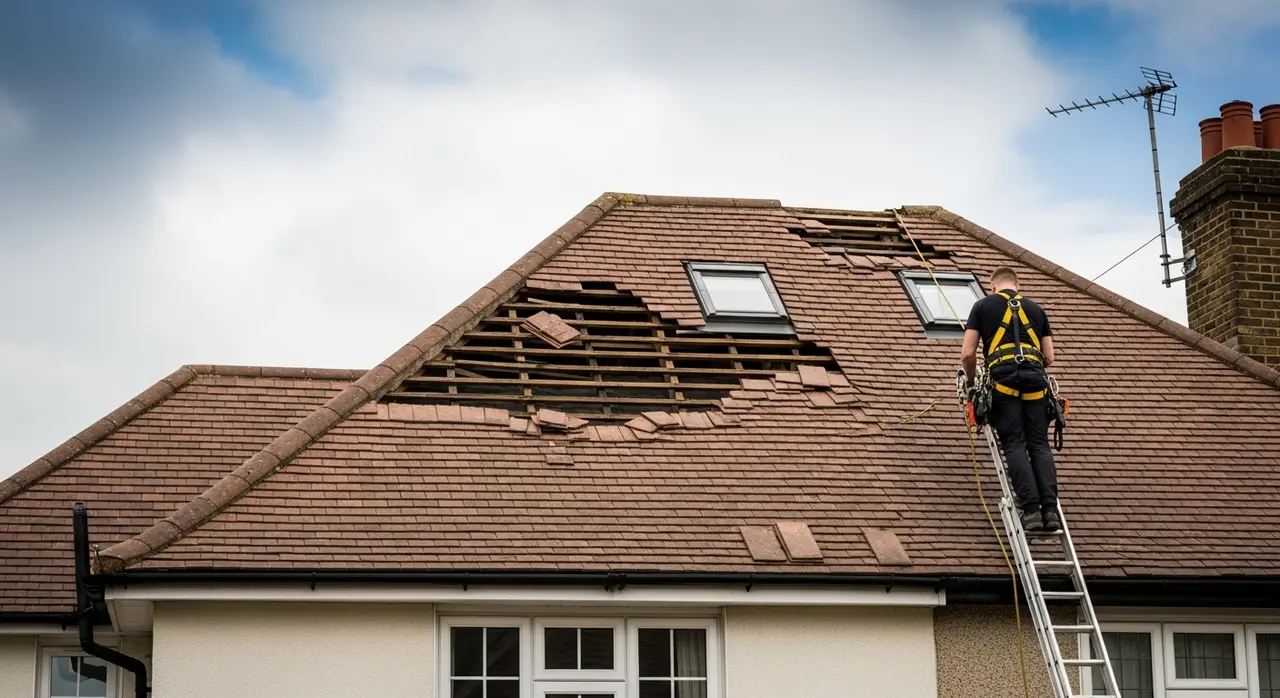
Storm-Damage Roof Inspections and Repair Reports
After high winds, you need two things quickly: the roof made weathertight and clear evidence of what happened. City Building and Roofing Ltd inspect storm-damaged roofs across London and Surrey, provide dated photographs and a contractor's repair report, and carry out the repairs.
Fully insuredInsurance backed guaranteesHighly rated by customersEmergency roof repairs
View our Google ReviewsQuick Answer
A storm-damage roof inspection is a prompt visual check of a roof after high winds or severe weather, recording visible damage such as missing tiles, ridge damage and displaced flashings with dated photographs. City Building and Roofing Ltd provide a contractor's repair report and quotation that owners can use for repairs and share with their insurer, and arrange temporary weatherproofing where needed and available.
What we do after a storm
High winds find every weakness in a roof: tiles that were marginal come off, ridge mortar that was cracked lets go, and flashings lift. After a storm the priorities are stopping further water damage, documenting what happened while the evidence is fresh, and pricing the permanent repair.
Our inspection records the visible damage with dated photographs and sets it out in a contractor's repair report — what is damaged, what likely caused it, and what the repair involves. Owners regularly submit these reports to insurers alongside claims.
One safety point we will always make: never climb on a roof, or a ladder, to check storm damage yourself. Wind-loosened tiles and wet surfaces are genuinely dangerous. Photograph what you can see from the ground and leave the rest to us.
Signs of storm damage to look for from the ground
- Tiles or slates visibly missing, slipped or lying in the garden
- Ridge or verge tiles out of line, or mortar debris in gutters and on paths
- Lifted, creased or missing lead around chimneys and abutments
- Gutters or downpipes pulled away, cracked or overflowing
- New damp patches or drips inside after wind-driven rain
- Felt, GRP or rubber flat roof coverings lifted, ballooned or torn
What the inspection covers
Missing and slipped tiles
Every visible displaced tile or slate, plus the surrounding area — wind rarely damages one tile in isolation.
Ridge and verge damage
Loose or missing ridge tiles and failed bedding, which become dangerous in the next storm if left.
Leadwork and chimneys
Lifted flashings, damaged flaunching and stack condition after wind loading.
Gutters and rainwater goods
Storm-damaged, blocked or detached guttering that will cause secondary damp damage if ignored.
Temporary weatherproofing
Where needed and available, we make the roof safe and dry with temporary covering before the permanent repair.
Dated photographic evidence
Clear, dated photographs of all visible damage — the record insurers ask for and the baseline for the repair quote.
How It Works
Contact us promptly
Call the London or Surrey line or send an enquiry. Storm damage enquiries are prioritised.
Make-safe where needed
If water is coming in, we arrange temporary weatherproofing where offered and available to limit internal damage.
Full inspection
We inspect and photograph all visible damage from safe access — ground, ladder or drone where appropriate.
Repair report and quotation
You receive the dated photographs, a contractor's description of the damage and an itemised repair quotation.
Permanent repair
Once instructed — by you or following your insurer's process — we complete the permanent repair with a written workmanship guarantee.
Important notes on insurance
- We are roofing contractors, not loss assessors or insurance advisers — we document and repair damage, we do not assess or negotiate claims
- Whether damage is covered is always your insurer's decision under your policy terms; storm damage is commonly covered while wear and tear is not, but we cannot determine coverage
- Our report describes what is visible and its likely cause; insurers may send their own assessor
- Temporary weatherproofing is subject to conditions, safe access and availability during widespread storm events
We would rather tell you the honest position than win work on promises we cannot keep.
London & Surrey Coverage
We attend storm-damaged roofs across London and Surrey — exposed Victorian terraces in west London, tall stacks and parapets in Kensington and Westminster, and detached homes across Weybridge, Cobham, Esher, Staines and the Thames-side towns that catch the worst of south-westerly gales. After major storms demand is high, so contact us as early as possible.
Request availability and quotation
Find City Building and Roofing Ltd on Google
Customers across London and Surrey can find City Building and Roofing Ltd on Google to read reviews, view recent work and contact the team directly. We recommend calling the correct local number for your area — Surrey enquiries on 01932 950 995 and London enquiries on 020 7118 0095.
Frequently Asked Questions
What should I do first after storm damage?
Stay off the roof and away from anything that might fall. If water is coming in, move belongings, catch drips and — if safe — photograph what you can see from the ground. Then call us: we prioritise storm enquiries, make the roof safe where needed, and document the damage properly.
Will my insurance pay for storm damage?
Storm damage is commonly covered by buildings insurance while gradual wear and tear is not — but the decision is always your insurer's, under your policy terms. We cannot determine coverage. What we provide is what insurers ask for: dated photographs and a contractor's repair report with an itemised quotation.
Do you provide reports for insurance claims?
Yes. Our storm-damage reports include dated photographs of the visible damage, a plain-English description of what we found and its likely cause, and an itemised repair cost. Owners submit these alongside their claims. We report factually; we are not loss assessors and do not negotiate with insurers.
Can you stop the water coming in today?
Where temporary weatherproofing is offered and available, we make storm-damaged roofs safe and dry ahead of the permanent repair. During widespread storm events demand spikes, so we triage by severity — an actively leaking roof is treated more urgently than a cosmetic issue.
Is it safe to check the roof myself?
No — please don't. Storm-loosened tiles, wet surfaces and gusty conditions make roofs and ladders genuinely dangerous for anyone without training and proper access equipment. Everything useful can be seen from the ground or documented by us safely.
How quickly can you attend after a storm?
We prioritise storm damage and aim to attend quickly, with actively leaking roofs seen first. After a major storm affecting the whole region, honest answer: everyone calls at once, and we work through enquiries in order of severity. Calling early gets you in the queue sooner.
Ready to Get Started?
Contact us today for a free, no-obligation quote. We serve all of London and Surrey with professional roofing and building services.
Free quotes · No obligation · Fast response